While staying at a Scottsdale resort in early August, I discovered it had a Native American Cultural Discovery exhibit. I’m always interested in finding out what those in the hotel business consider important for visitors to learn about Indians. The decent-sized room had several cases that focused on kachinas, or katsinum as they’re called by the Hopi. These Pueblo Indians are not the only ones to have developed a large hegemony of sacred beings, but their carved cottonwood dolls are one of the greatest categories of collectibles in the American Southwest.
Hopi katsinem are also one of the most recognizable “brands” of types of Indian arts. They vary from elaborate sculptures worth thousands of dollars to modest handmade figures sold at souvenir prices. I find the katsina figure to be a real paradox: on one hand, it represents a genuine sacred spirit possessed of powers important to the Hopis and a means of teaching their children, on the other hand it conveys an immediate exoticism and “otherness” that specific souvenirs conjure up just by their existence.
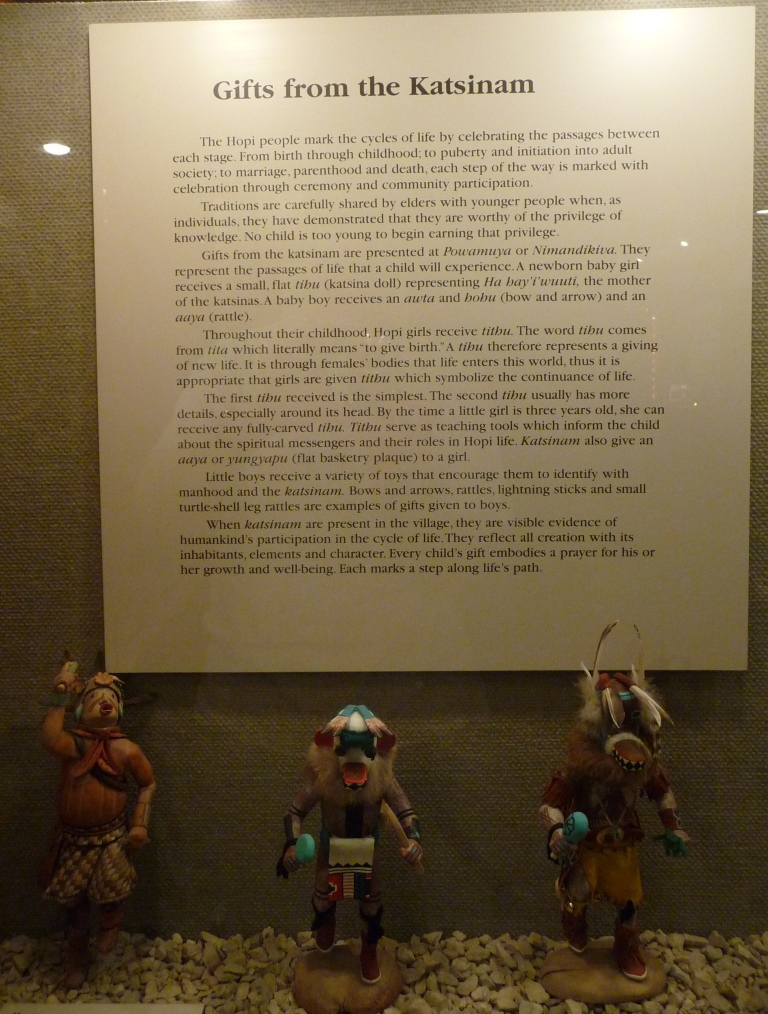 Gifts from the Katsinem
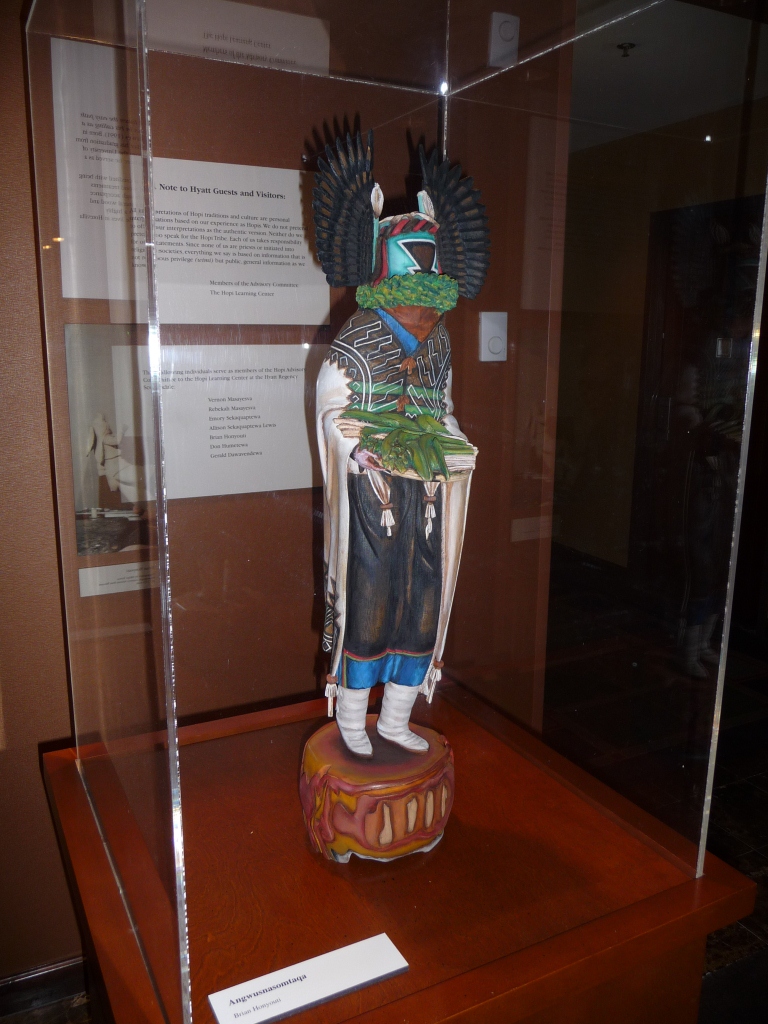 Katsina of Angwusnasomtaqa by Brian Honyouti
Perhaps the most marvelous use of Native figures is the rendering of the clowns who appear during Pueblo Indian dances. These creatures play a role in the purpose and community meaning of the dances. The Koshare, represented in black and white stripes, grace modern jewelry, pottery and other craft and art forms. Mudheads, with their ugly ogre faces, are also popular creatures. Non-natives find them appealing and exotic. Certainly, their depiction provides local “color” without providing offense.
Among the most popular visual motifs for Southwestern Indian arts are the sacred spirits of the Pueblo Indians. These beings vary by cultural group. Most people are quickest to recognize Hopi katsinas (as opposed to the old spelling “kachina”). Hopi artists carve these figures from cottonwood, and have a wide range of beings that vary from powerful deities to sacred clowns. Zuni artists have contributed the sun face symbol for the sun god, and the popular images of the Rainbow and Knifewing spirits. These figures have been used for designs on jewelry, thus saving more significant spirits, like the Shalako, from depiction.
Fortunately, the Pueblo peoples are old veterans at this sort of compromise. The Rio Grande Pueblo smiths would make representations of their sun god in the form of the dragonfly, and wrought this symbol to resemble the Christian cross. To the padres who oversaw them during colonial times, they looked like the very epitome of a good Catholic in their cross necklaces.