Bruce Bernstein, the Director of SWAIA, has had a long and distinguished career in the world of Indian arts. His scholarship is top-notch. I recently reread a piece by him in an anthology, Native American Art in the Twentieth Century: Makers, Meanings, Histories. In doing research for my next book on Southwestern Indian bracelets, I found an article he’d contributed to the anthology on how the 1960s and 1970s provided new contexts for Indian arts. Bernstein pointed out the start of an international profile for Indian artists, including foreign exhibitions for selected individuals. He describes how changes in the American social and intellectual climate helped make Native American Studies an academic discipline.
My own education in the first half of the 1970s occurred too early to benefit from this. My dual major of art history and anthropology of the North American Indian (a mouthful) shows how great the emphasis on anthropology still was at that time. The creation of Native American Studies helped usher in a multidisciplinary — and interdisciplinary — approach to Native art production. Bernstein also wisely points out that the “traditional” arts with their handcrafted nature made them popular in America in general. Even their introduction into home decoration played a role we still recognize today.
We recently received a report from a usually reliable source about a practice that happens at the Inter-Tribal Indian Ceremonial, held in Gallup at Red Rock State Park. This event most often takes place the week and weekend before the SWAIA Indian Market in Santa Fe. The Inter-Tribal has had a rough patch related to funding, but is still considered one of the important shows in the summertime calendar of Indian arts. Native artists submit their work for judging and display, and the judges tend to be experienced Indian traders and regional experts.
It turns out that artists pay a holding fee to keep the judged art on display through the length of the Ceremonial; this fee also causes some of them to place an extraordinarily high price on a prize-winning piece in the hopes of not selling it at Ceremonial, since it can get a higher price as a result at the Indian Market or elsewhere. An award from the Ceremonial judges is a known boost in value for such a work.
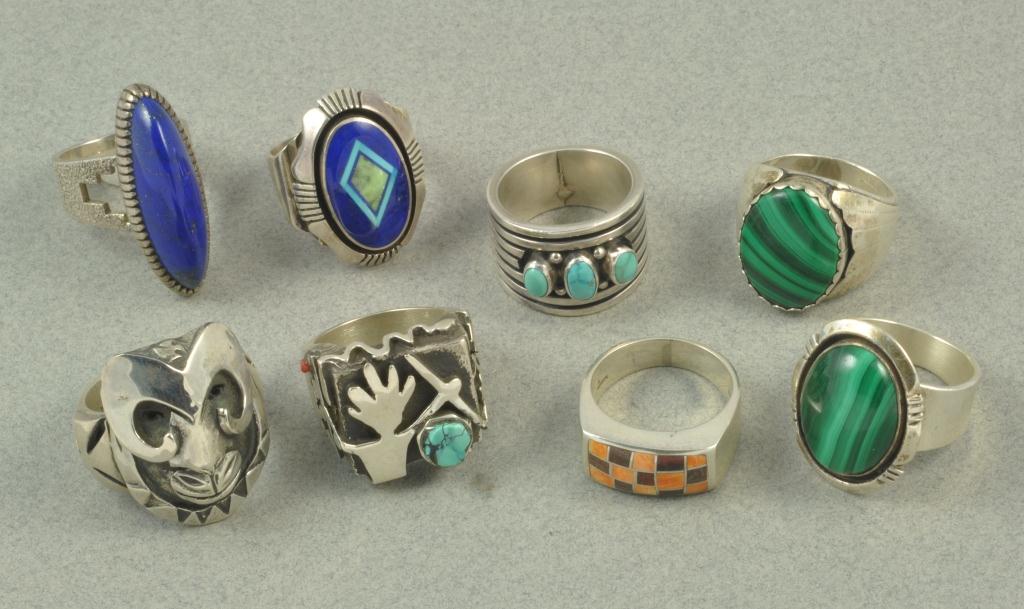
For those in the know, the answer is yes. SWAIA’s Indian Market, however, is still the clarion call of the year’s best art work to date. Many curators, collectors, and artists find that the works on offer there define the current trends in Indian arts. Others have lately begun to wonder if the recession and the pull of other markets (such as Japan’s eager collectors) have made Indian Market’s vendors less innovative. Last year, we noted some fine artists had less variety in items at their booths. Many notable inlay jewelers showed a limited range of designs; one artist admitted to me that his best work was available through a dealer who was set up in a Santa Fe hotel room. Several popular potters brought only a handful of creations.
Are deals being made before (or during) Market that siphon the “good stuff” away? Only ten years ago, the first hours of Indian Market were fraught with collector frenzy and selling intensity. That’s hardly been the case in recent years. Yes, certain artists still sell out by late morning, but the action may be taking place more and more offstage. We’d like to hear from people who’ve attended Indian Market over the last decade and see if they agree with this perception of slowing change . . .