Like the Covered Wagon in Old Town, Skip Maisel’s store in downtown is one of the most famous curio shops along Route 66. Indian-made jewelry from Maisel’s shop, even though much was bench-produced, serves as popular vintage collectibles. The store is still going strong today and acts as many tourists’ introduction to souvenir Indian arts. Works by notable jewelers figure in the front cases, but the real goods—lots and lots of them—are the mass-produced necklaces, bracelets, pendants, and rings that line the aisles.
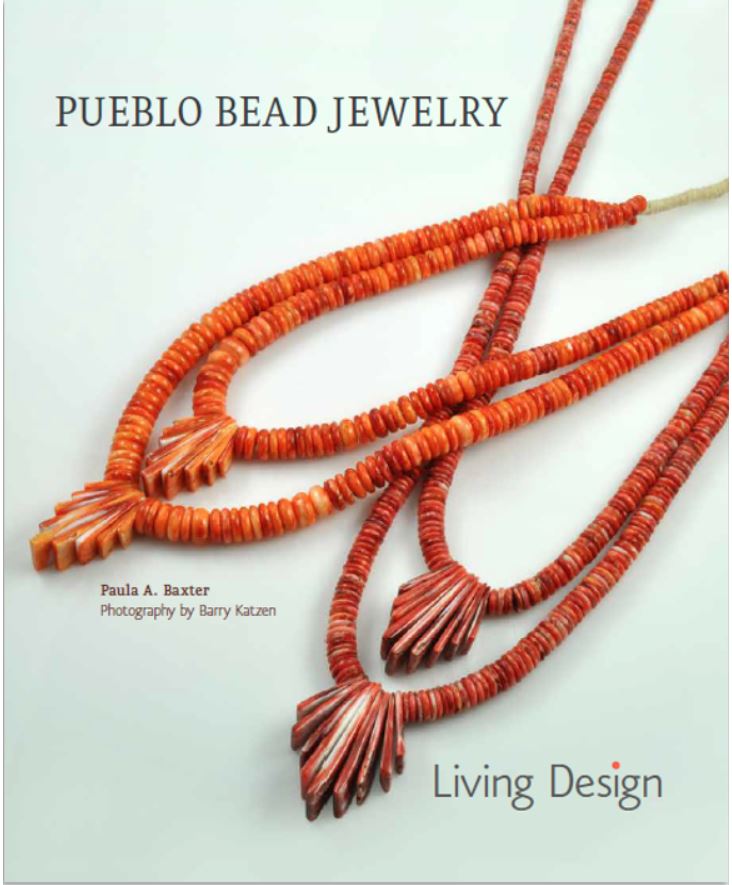
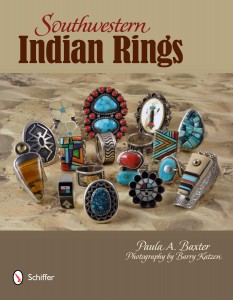
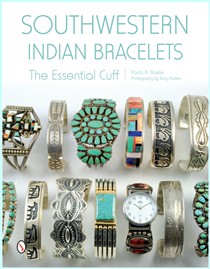
As always, what’s unfortunate is that these goods can be perceived as representing what genuine Indian-made arts are like. The fact is that curio jewelry usually is stuck in a mid-20th century stylistic time warp, reflecting designs that are called “traditional” and “classic.” In my forthcoming book, Southwestern Indian Bracelets: The Essential Cuff, I’ll be examining what really lies behind these labels and why they denote value judgments both good and bad.
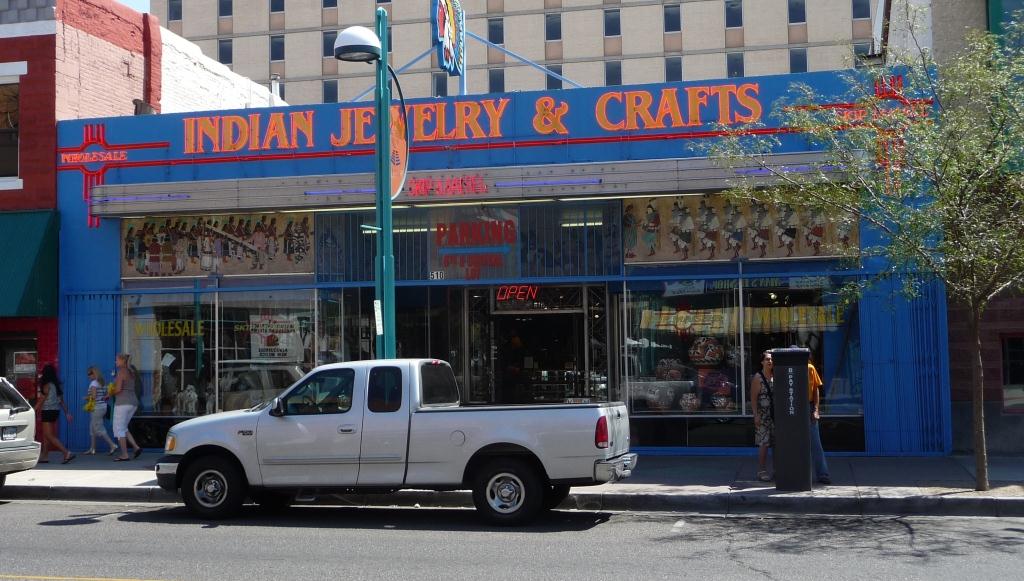 Maisel’s Indian Jewelry & Crafts store, Albuquerque
There’s a place in the Southwest that allows a whole new view of Apache art. For those touring southeastern New Mexico, a stop at the Inn of the Mountain Gods Resort and Casino in Mescalero, New Mexico, provides a feast for the eyes. This resort, renovated and reopened in 2005, contains original works of art by Apache artists along the inn’s eight-story walls. Apache design is the theme, including the larger-than-life bronze statues of crown dancers by Fredrick Peso. Two major artists of Apache heritage, Allan Houser and Larry Vasquez, remind us that there are more perspectives out there than the familiar Navajo and Pueblo and their aesthetics.
For those traveling in Indian Country this summer, investigations of Indian arts will often uncover objects made for humorous purposes. Native peoples, including those of the Southwest, have long honed an ironic stance toward life. When the Institute of American Indian Arts opened in 1962 in Santa Fe, its most notable young painters expressed their rage, anger, and irony in marvelous compositions. Artists like T.C. Cannon and Fritz Scholder painted young Natives with the American flag draped around their shoulders like a poncho. They depicted Indians at bars wearing bleak faces and quietly roasted the oblivious white patrons who boosted Indian artistic fortunes. Indian “folk art” performs the same role by showing that traditional Indians are more conversant with modern desires than many tourists realize. Just go to any McDonald’s in Four Corners Country and you’ll see this at once.