We watched PBS’s “The National Parks: America’s Best Idea” documentary by Ken Burns, and enjoyed it in general. One thing that we’ve been a bit sensitive about, however, is the overall inclusion of Native Americans in this five-part series. Technically, the treatment given to Indians has been balanced and fairly objective. A recurring speaker is a Parks ranger who is an Indian and his comments have been sensible. Yet every time that Indians get a mention, on comes the melancholy flute music. The beautiful Ancestral Puebloan ruins at Mesa Verde were shown a few times, but the story behind them was reduced to a one-sentence explanation that probably passed by most viewers.
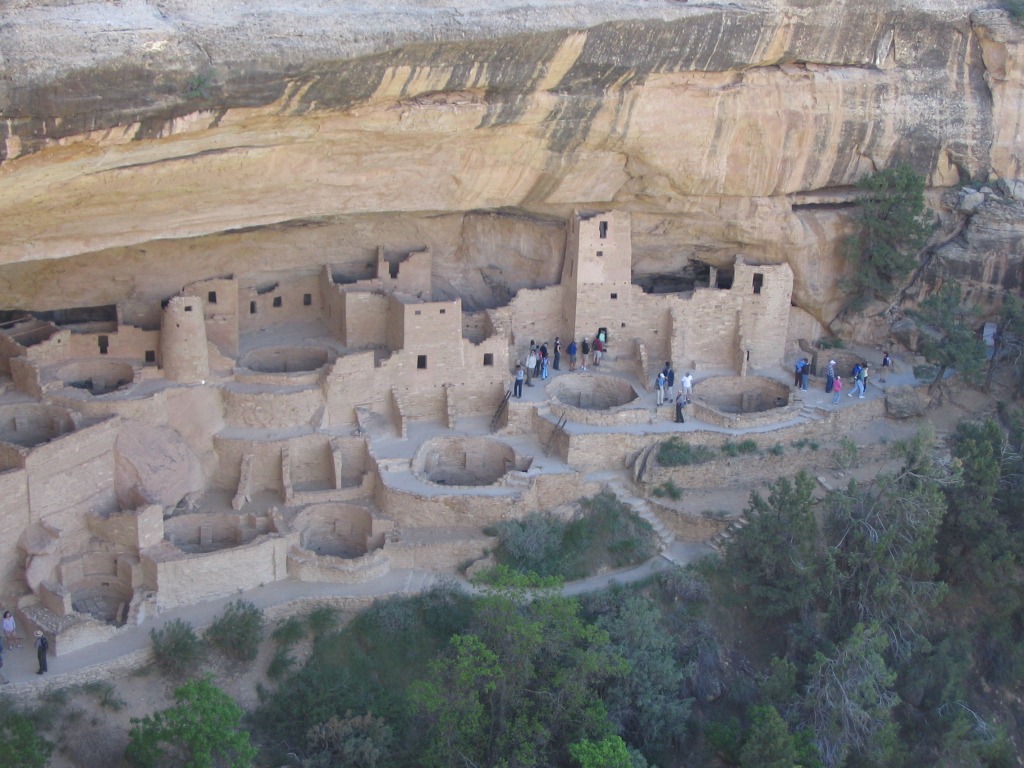 Cliff Palace at Mesa Verde National Park
It’s hard to criticize Ken Burns, whose films are stately and thoughtful; in addition, his real focus is a chronological timeline of the parks’ birth and the individuals who made them what they are. Yet, I cannot help wondering if once again, Indians are getting short shrift. Most of the western parks (and some of the eastern) are located in lands that were especially sacred to the Native peoples who lived there or near there, e.g. the Grand Canyon region is the source of many Southwestern Native origin stories. I would have liked to hear more about this. Anybody else feel the way I do?
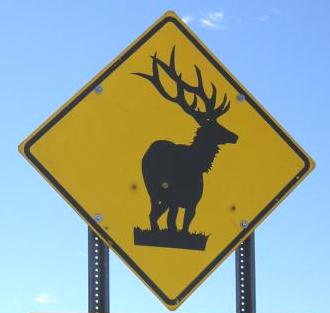
Driving the highways and back roads of Indian Country means running into those yellow “Watch for Elk” signs from time to time. I’ll never forget coming face to face with a herd in the Grand Canyon’s South Rim. We were walking from the El Tovar Hotel over to the post office complex when we spotted a group of five adults and two youngsters. We were on a level park path and they were grazing about fifteen feet or so from where we were passing.
First of all, they were BIG! These guys, each adorned with a huge rack of glittering antlers, stood about eight or nine feet high. We could feel their sudden anxiety like a wave; we knew at once not to do anything other than move on quickly and quietly. No clicking of cameras, no matter how picturesque the view. No cooing or waving, or attempts to draw closer. It was a pity, for they are beautiful creatures—but they are wild animals and this was their turf.
When I saw this beaded fellow at Turquoise Village in Zuni last year, I knew he’d be the perfect commemorative souvenir.
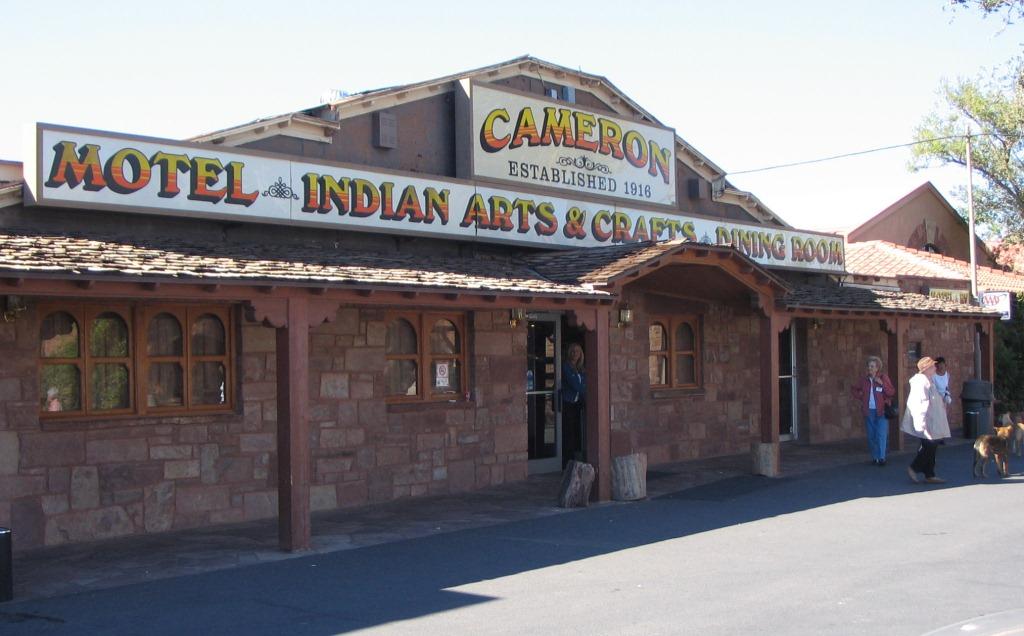
One of our favorite rides is from Cameron to the eastern entrance of the Grand Canyon at Desert View. The Cameron Trading Post has come to symbolize the best and worst of Southwestern souvenirs. The town and trading post are named after Ralph H. Cameron, a noted entrepreneur of the Grand Canyon’s attractions and one of the last territorial delegates from Arizona to the U.S. Congress. Cameron also became a U.S. senator from Arizona, which is enjoying its one-hundredth anniversary of statehood this year.
This portion of Highway 64 was originally made by the Fred Harvey Company so its famous “Indian Detours” could convey tourists to the Canyon’s South Rim. This great stretch of road climbs and drops 3000 feet in 35 miles.